

In the global tech conversation, Artificial Intelligence (AI) often feels distant—like it belongs in Silicon Valley boardrooms or high-tech research labs in Europe or Asia. But the truth is, AI is already shaping daily life in Africa, from how we access health services to how our crops are grown, our children are taught, and our stories are told.
And at the heart of this movement?
African women.
Brilliant, bold, and often under-celebrated, African women are rising as AI developers, researchers, data scientists, ethicists, and innovators.
They are not just working in AI; they are shaping it with cultural intelligence, community values, and a deep commitment to justice.
Why AI Needs African Women
Let’s start here: AI is not neutral.
It reflects the values and perspectives of those who build it. If the data is biased or incomplete, or if the people designing it don’t represent the world’s full diversity, the outcomes can be harmful.
For example:
- An AI health tool trained only on Western data may misdiagnose African patients.
- A facial recognition system may not identify darker skin tones accurately.
- A language model might ignore local dialects, customs, or lived realities.
That’s why the presence of African women in AI isn’t just good for gender parity but it is even more critical for fairness, functionality, and future relevance.
Meet the Pioneers
Here are just a few African women making waves in AI—and proving that we belong in the driver’s seat of the digital future:
🟣 Angela Wamola (Kenya)
Through her role at the GSMA, she promotes AI adoption in Africa’s mobile economy, ensuring digital inclusion for women and underserved populations.


🟣 Dr. Joy Buolamwini (Ghana/USA)
Founder of the Algorithmic Justice League, she has exposed racial and gender bias in AI systems used by major tech companies—and is calling for global reform.
🟣 Chinasa T. Okolo
A Nigerian-American computer scientist and Brookings Institution fellow, Chinasa focuses on ensuring that AI development does not leave behind communities in the Global South. She has contributed to Nigeria’s national AI strategy and advocates for responsible AI adoption.

These women are not just working in tech, they are challenging dominant narratives, creating tools that serve real African needs, and ensuring AI becomes a force for equity, not exclusio
Why Their Work Matters
When African women shape AI, they center the continent’s realities—its languages, its challenges, its wisdom.
Their work matters because:
- They speak from lived experience: Understanding what surveillance, misinformation, or health inequity actually look like on the ground.
- They bring ethical clarity: Often advocating for transparency, accountability, and data justice in systems built for scale.
- They protect our digital futures: Making sure emerging tech doesn’t widen the gap—it bridges it.
And perhaps most importantly, they inspire a new generation of young African girls who no longer have to ask, “Can I be in AI?”
The answer is yes. They already are.
How Do We Support & Scale Their Impact?
If we’re serious about ensuring African women continue to shape AI, here’s what we need:
- More investment in women-led AI research and startups
- AI fellowships, hackathons, and grants focused on African problems
- Support for African language data projects
- Public policies that embed gender and ethical impact into AI governance
Because it’s not enough to open the door—we must redesign the room.
Final Word
AI will not wait. It’s moving fast, and decisions are being made now that will impact generations.
African women cannot afford to be silent participants.
We are creators, critics, and custodians of this technology and we have a right to shape what it becomes.
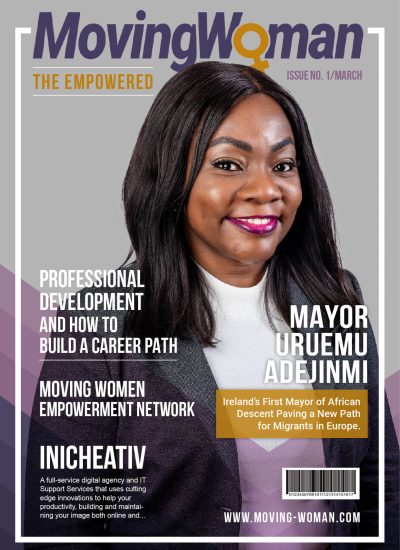
At Moving Woman Magazine, we celebrate African women who are reimagining intelligence, not just artificial, but authentic, powered by culture, purpose, and community.
The future of AI is not just technical. It’s African. And it’s female